
Pem's Spiritual Crisis and Conversion
City of GodA rebellious priest moves from unsettling sermons to formal examination, resignation, and a new life as a Jew married to Sarah Blumenthal.
increasing Bearing strength in each event
 decreasing
Bearing strength in each eventdecreasingUnsettling Sermons at St. Timothy's
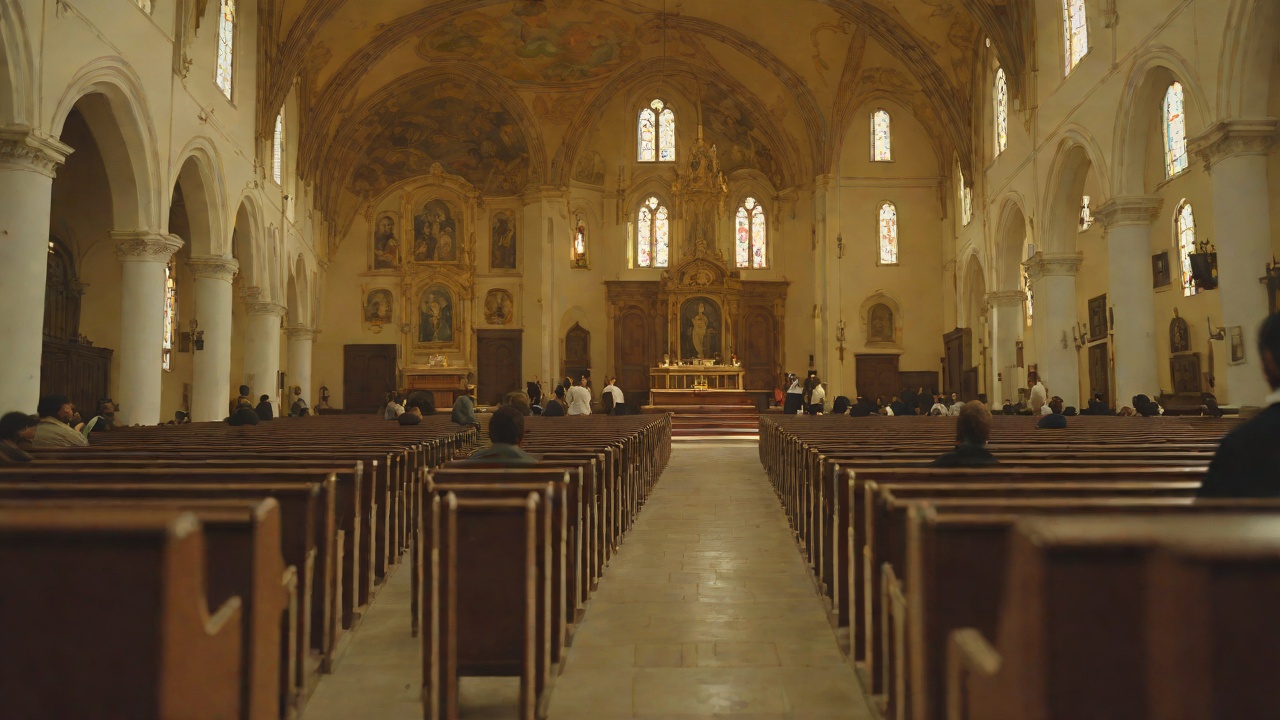
Unsettling Sermons at St. Timothy's
Context
Pem stands before his small congregation and asks whether faith must be blind, whether God can be contained in any story, and whether the Holocaust has left Christianity's claims intact. The sermons empty the pews further and reach the bishop through the parish grapevine. He is accused of a creeping intellectual pride.
Significance
The sermons are not outbursts but a systematic dismantling of every comfortable distinction between reason and revelation. Pem insists that the intellect is part of the whole being and cannot be patronized. His questions are heretical in the strict sense: they threaten the church's legal and doctrinal authority.
Consequences
His reputation as a troublemaker grows, while his own faith withdraws into a smaller and more stubborn core. The sermons prepare the ground for the crisis that the stolen cross will bring to a head.
Bishop's Warning over Grilled Fish

Bishop's Warning over Grilled Fish
Context
An old Yale friend, now a bishop, meets Pem for lunch and tells him plainly that he is doing and saying things that are worrying. The bishop speaks of the whole man coming apart in three hundred and sixty degrees and warns that self-destruction gathers momentum. Pem answers with jokes and asks for a double espresso.
Significance
The lunch exposes the generational and temperamental divide between the institutional church and the renegade priest. The bishop represents order, patience, and collegial discipline; Pem represents the absolutism of the sixties. Neither can persuade the other, and the meeting hardens Pem's sense of isolation.
Consequences
Pem continues on his path, and the bishop begins the administrative process that will lead to examination. The encounter also gives Pem a clear picture of the cost of his honesty.
Remarks to the Bishop's Examiners
Remarks to the Bishop's Examiners
Context
Pem addresses a panel of church examiners with a prepared statement that quickly becomes a lecture on heresy, original sin, Gnosticism, Pagels, and the political history of Christianity. He argues that true faith cannot discard the intellect and that the doctrine of the Fall has become an instrument of social control. He ends by calling himself a good Christian.
Significance
The remarks take the higher criticism seriously at a moment when the church prefers administrative calm. Pem names the historical contingency of every dogma, from infant damnation to apostolic succession. His performance is both a profession of faith and a declaration of independence.
Consequences
The examiners are alarmed but do not immediately expel him. He remains suspended, unassigned, and increasingly homeless within his own tradition.
Resignation from the Priesthood
Resignation from the Priesthood
Context
Pem tells Everett that he has mailed the letters that decertify him as a priest. He jokes about a ceremony with drums and a bishop tearing off his crucifix, but the reality is simple: he has told the church what is in his heart, and the church has let him go. He must now learn to live as Citizen Pemberton.
Significance
The resignation is not a rejection of God but of the claim that any institution can own God. Pem keeps his paperback Augustine and says he has given up the Trinity, not God. The vestments and theological library become artifacts of a former life.
Consequences
He turns to the Synagogue of Evolutionary Judaism, where his intellect can enter his faith without demands for mythological consent. The path from Episcopal priest to Jewish convert is shocking, but it is the logical answer to his own questions.
Conversion to Judaism and Marriage

Conversion to Judaism and Marriage
Context
Pem studies with a former colleague of Sarah Blumenthal, prepares for the mikvah, and describes Judaism as Christianity without Christ. He marries Sarah in a civil ceremony downtown, with Joshua Gruen's sister as the best woman. At the reception he speaks of standing with one foot in each tradition and then announces he will soon be a Jew.
Significance
The conversion is both an act of love and a theological settlement. Pem has found a tradition that permits radical questioning as a sacred duty. His glad heart marks the end of his long crisis and the beginning of a new vocation.
Consequences
He breaks the news in a wedding prayer that remakes God rather than abandoning Him. The marriage gives him a family, a congregation, and a home inside the very questions that once drove him out of the church.
before the cross theft, during Sunday services at the empty East Village church
a Wednesday lunch before the theft, when the bishop summons Pem for a private talk
when the diocese formally examines Pem after the stolen cross publicity
after St. Timothy's is deconsecrated and Pem has returned from Europe
in the year after the archive recovery, before the wedding at the Jefferson hotel
